
What Happened On



You Cannot Shake Hands With a Clenched Fist
October 19, 1971
The prime minister of India Indira Gandhi states at a New Delhi press conference, "You cannot shake hands with a clenched fist."


Arthur Godfrey Fires Julius La Rosa on the Air
October 19, 1953
In what is considered one of the worst on-air blunders in entertainment history, during the radio portion of his show, after the television portion had ended, Arthur Godfrey asks Julius La Rosa to sing Manhattan. After which Godfrey announced that this was his swan song and that La Rosa was leaving the show. La Rosa had not been told of his impending dismissal and was just as shocked as the audience.
La Rosa had a large following on the show, receiving more fan mail than Godfrey himself. A dispute occurred when La Rosa missed a ballet lesson, as required by all the onstage talent. La Rosa then hired an agent, a practice forbidden by Godfrey. When Godfrey received a letter from the agent informing him that all dealings with La Rosa would be through the agent, Godfrey decided to fire La Rosa.
Godfrey would later state that he fired La Rosa because he "lacked humility". This statement backfired and comedians used this statement to mock Godfrey.
Public opinion about Godfrey took a down turn after this incident and his popularity began to decline.
Abraham Lincoln Grows a Beard
October 19, 1860
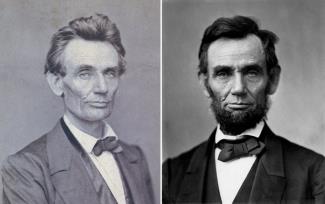
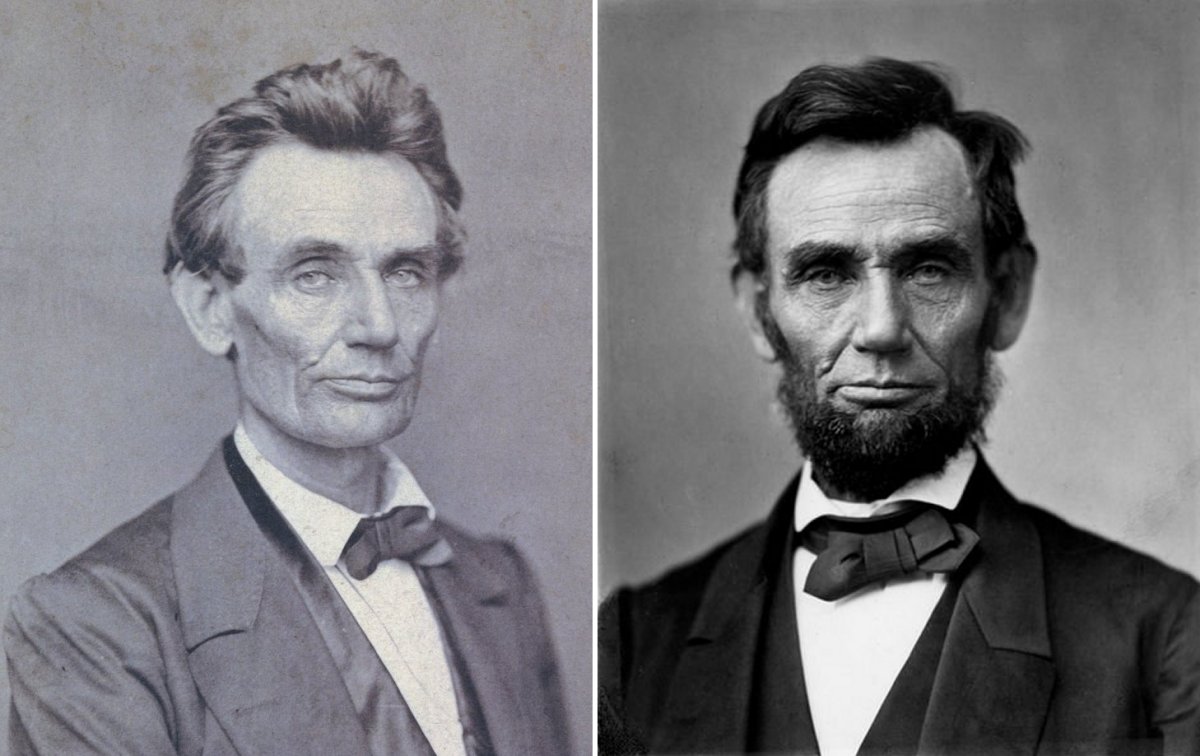
Future U.S. President Abraham Lincoln writes back to an 11-year-old girl who wrote a letter to him suggesting he should grow a beard. He stated it would be silly to start growing one; but he did so anyway.
Benjamin Franklin Flies a Kite
October 19, 1752
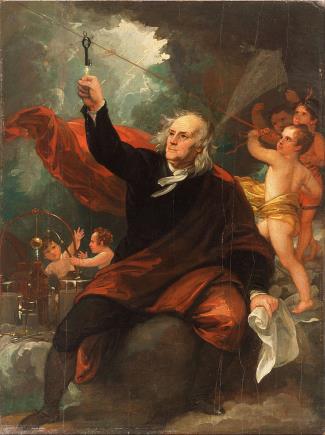
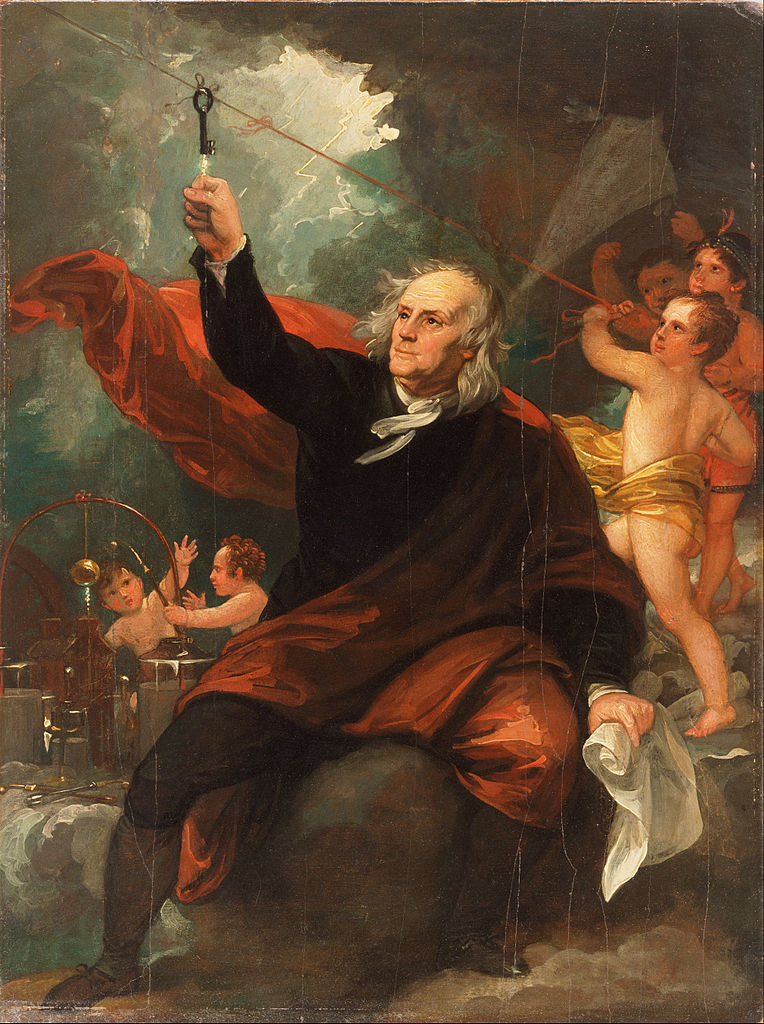
Benjamin Franklin describes his famous kite experiment, proving that lighting and electricity are related, in the Pennsylvania Gazette.
According to Franklin's description of the experiment, a silk kite with string that led to a key was to be flown during the early stages of a storm. The kite had a separate silk string that was attached to the kite string near the key. The kite flyer was to stand under a shelter so that he and the silk string stayed dry protecting them from the electric charge.
It is unlikely the kite was struck by lightning, as this would have probably seriously injured Franklin, but simply gathered electricity from the storm as Franklin predicted it would. This and his lightning rod experiments helped prove that lightning was a form of electricity.


End of the World
October 19, 1533
German Monk Michael Stifel, using clues from the Bible, predicted Judgment Day and the end of the world would occur on October 19, 1533 at 8 am. Many of the townsfolk, believing his prediction, did not plant crops or store foods and burned their homes and possessions when the day came. Afterwards, Stifel had to be taken into protective custody with the villagers chanting death threats outside his cell.
Stifel was an influential mathematician, inventor of an early form of logarithms, and coiner of the term "exponent".
Birthdays